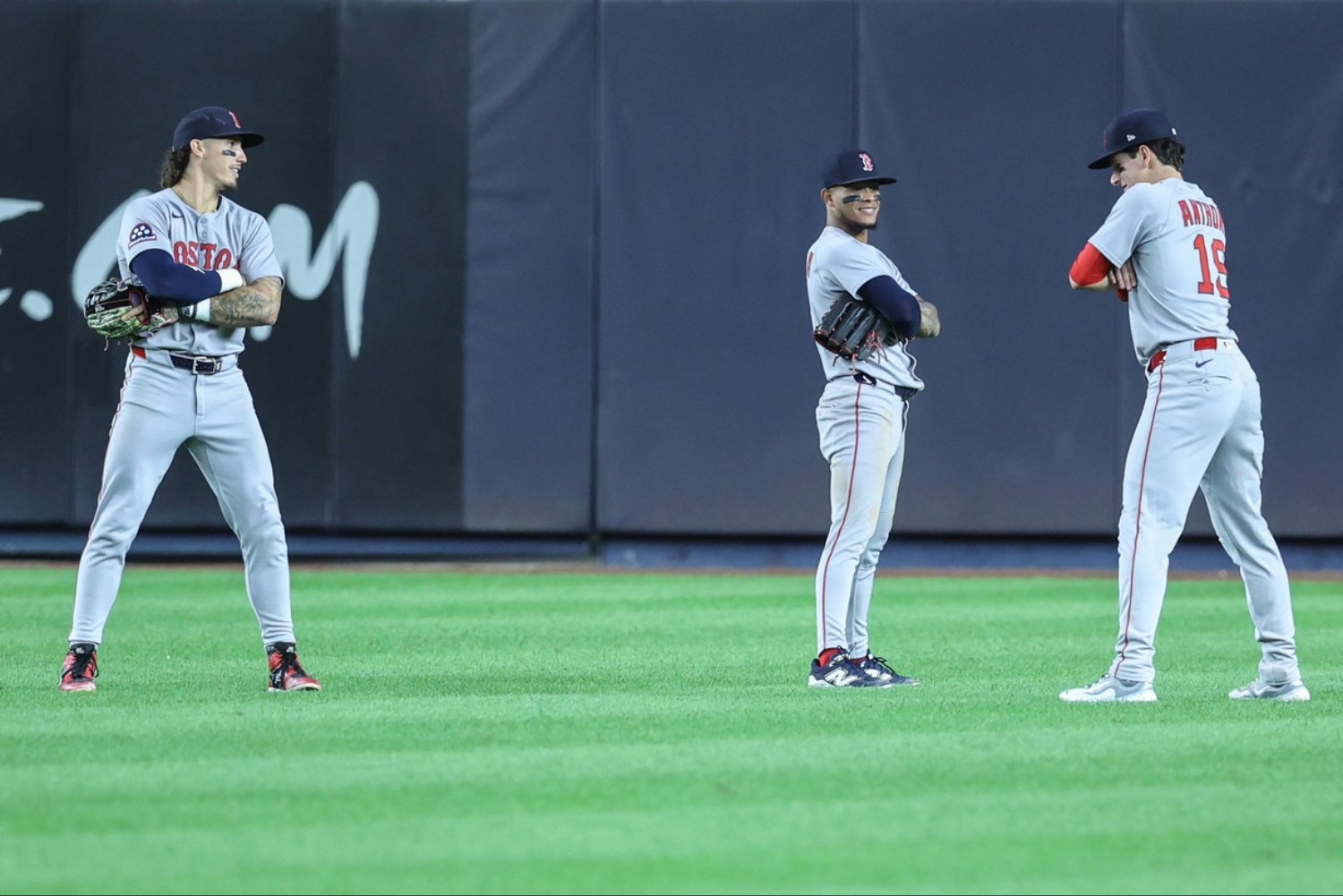
The Complex Tapestry of Red Sox Outfield Performance in 2025
The 2025 season for the Boston Red Sox was a tale of immense talent meeting formidable challenges, particularly within their dynamic outfield. Touted as one of the most promising units in Major League Baseball, the Boston Red Sox outfielders entered the year with sky-high expectations. However, a combination of untimely injuries and strategic position shuffling prevented this gifted group from consistently reaching its full, collective potential. Despite moments of individual brilliance, the overall narrative for the Red Sox outfield in 2025 became one of what could have been, leaving fans and analysts alike pondering the crucial adjustments needed for a more cohesive and dominant 2026 campaign.
As the Red Sox find themselves in the offseason after a premature exit against the Yankees, the front office is undoubtedly reviewing every aspect of the roster. Our focus here dives deep into the outfield, dissecting the performances of each key player. While many delivered strong individual seasons, the overarching theme of unfulfilled potential due to external factors is undeniable. Understanding these dynamics is crucial for charting a path forward, especially with the organizational challenge of managing an abundance of outfield riches.
Diving Deep: Key Boston Red Sox Outfielders and Their 2025 Campaigns
The Red Sox outfield was undeniably stocked with firepower, featuring a mix of burgeoning stars, versatile defenders, and potent bats. Let's break down how each player navigated the complexities of the 2025 season.
Roman Anthony: The Rookie Sensation Derailed
Heralded as a future cornerstone, 21-year-old Roman Anthony lived up to the hype and more in 2025. After an impressive showing for Team USA in the World Baseball Classic, Anthony’s call-up in June immediately sparked the Red Sox offense. He slashed an exceptional .292/.396/.463 with a 2.7 fWAR and a stellar 140 wRC+, instantly becoming arguably the brightest spot in the outfield. His presence was an absolute game-changer, bringing a blend of mature hitting and rapidly improving defense to Fenway Park.
While a few "rookie errors" dotted his early defensive outings, Anthony's glove quickly caught up, showcasing his athletic prowess. At the plate, there were tantalizing signs of his power stroke beginning to emerge just before an unfortunate oblique injury prematurely ended his season. This injury, coupled with the decision to keep him in the minors until June, likely cost Anthony a legitimate shot at the American League Rookie of the Year award. Had he been on the roster from Opening Day, his full season numbers would have undoubtedly placed him firmly in contention, highlighting the significant impact of the timing of his debut and subsequent injury. His development path remains incredibly bright, positioning him as a central figure for the future.
Ceddanne Rafaela: Defensive Anchor, Offensive Work-in-Progress
Ceddanne Rafaela continued to be a marvel in the field, solidifying his reputation as one of baseball's elite defenders. Despite significant shuffling between center field and second base – perhaps more than ideal for consistent rhythm – his defensive metrics were outstanding. He posted an impressive 22 Fielding Run Value in center field and committed only five errors at the position, consistently making highlight-reel plays that saved runs. His versatility is a tremendous asset, but the frequent positional changes might have contributed to a less consistent offensive approach.
Offensively, Rafaela’s season was a mixed bag. He slashed .249/.295/.414, contributing to a solid 3.8 fWAR but with a slightly below-average 91 wRC+. While his speed and occasional pop were evident, his aggressive plate approach remained a significant area for improvement. Rafaela’s tendency to swing at pitches well outside the zone limited his on-base opportunities and prevented him from maximizing his offensive potential. For 2026, a crucial development focus for Rafaela will be refining his strike zone judgment to complement his unparalleled defensive skills and fully unlock his two-way impact.
Jarren Duran: Offensive Spark, Defensive Liability
Jarren Duran's 2025 season encapsulated the very definition of a "mixed bag." On the offensive side, Duran was sneakily effective, batting .256/.332/.442. His 3.9 fWAR and 111 wRC+ highlighted his offensive contributions, which included leading the team in stolen bases with 24. Duran also emerged as a vital clubhouse leader, with the offense often appearing to feed off his energy and hot streaks, particularly during the summer months when the team made its postseason push.
However, Duran's defense remained a glaring Achilles' heel. His seven errors on the season are, as one might say, a generous descriptor of his struggles with the glove. A critical moment occurred in Game 2 of the Wild Card series when a dropped pop-fly proved costly, potentially altering the Red Sox's postseason trajectory. While his 2024 peak defensive form might be a distant memory, Duran's nightly offensive contributions and leadership underscore his importance to the team. The challenge for the coaching staff is to find ways to mitigate his defensive shortcomings while maximizing his undeniable offensive upside.
Wilyer Abreu & Masataka Yoshida: Impacted by Injury and Depth
Wilyer Abreu's 2025 campaign was unfortunately marred by injury. A significant quad injury towards the end of the season sidelined him, and upon his return, he was a shadow of his former self, unable to recapture his earlier form. This type of injury is particularly frustrating for a player whose game relies on both power and speed, hindering both offensive production and defensive range. Had Abreu remained healthy, his presence could have provided even more stability and offensive punch, further emphasizing the injury toll on the outfield unit.
Masataka Yoshida, a veteran presence among the younger talent, also played a crucial role, though his detailed 2025 statistics weren't highlighted in the initial context. It's safe to infer that with the emergence of Anthony and the existing talent of Rafaela and Duran, Yoshida likely served as a primary designated hitter (DH) or rotated into a corner outfield spot. His renowned plate discipline and ability to get on base would have been a valuable asset, especially in a lineup featuring more aggressive hitters. The sheer depth of outfield talent meant that managing playing time for players like Abreu and Yoshida became a delicate balancing act, contributing to the "five-man outfield" challenge.
Beyond the Box Score: Navigating the Red Sox's Outfield Abundance
The collective strength of the Boston Red Sox outfielders is truly the envy of many organizations. With Roman Anthony, Ceddanne Rafaela, Jarren Duran, Wilyer Abreu, and Masataka Yoshida all vying for playing time, manager Alex Cora faces a strategic dilemma that many coaches would welcome. Cora himself acknowledged this depth as an "asset," providing the flexibility to keep players fresh, deploy late-game defensive replacements, or pinch-hit for specific matchups.
However, this abundance also presents significant challenges. Managing the egos and expectations of five talented players, each deserving of consistent at-bats, requires a nuanced approach. The Red Sox must avoid a situation where talented players feel underutilized or where inconsistent playing time hinders their development or performance. Here are some insights into how the Red Sox might approach this:
- Strategic Platooning: Utilizing matchups against left-handed vs. right-handed pitching can maximize offensive output. For instance, pairing a player who struggles against lefties with one who thrives against them.
- Defensive Versatility: Rafaela's ability to play both center field and second base offers crucial flexibility, allowing other outfielders more consistent playing time.
- Designated Hitter Rotation: Masataka Yoshida's primary role as a DH can alleviate some outfield congestion, but the spot could also rotate among the other outfielders on their "off" days to keep their bats in the lineup.
- Prioritizing Development: For young stars like Anthony, consistent playing time is paramount for continued growth. The Red Sox will need to ensure he gets the bulk of the opportunities.
- Communication is Key: Open and honest communication from Cora and the front office about roles and expectations will be vital to keeping all five players engaged and motivated.
How the Red Sox navigate this "problem of riches" will undoubtedly shape their success in 2026. For a deeper dive into the strategic implications and potential solutions for managing this unique situation, check out our related article: Boston Red Sox Outfield: Managing Five Stars for 2026 Success.
Strategic Shifts and the Road Ahead for Boston Red Sox Outfielders
The 2025 season for the Boston Red Sox outfielders provided invaluable lessons. It highlighted the immense talent within the organization but also underscored the fragility of relying solely on raw ability without accounting for injuries or strategic allocation of resources. For 2026, several key areas will be crucial for the Red Sox to turn their outfield talent into consistent on-field victories.
- Health and Conditioning: Minimizing injuries, particularly to key players like Anthony and Abreu, will be paramount. Investing in robust strength and conditioning programs will be essential.
- Defensive Consistency: While Rafaela is elite, improving the defensive reliability of Duran is a significant focus. This could involve specialized coaching or even strategic positioning adjustments.
- Plate Discipline: For Ceddanne Rafaela, refining his approach at the plate to be more selective will unlock a new level of offensive potential, making him a truly elite two-way player.
- Role Clarity: Defining clear roles for each outfielder, even within a rotational system, can help players mentally prepare and perform more consistently. This could involve explicit platooning schedules or specific defensive assignments.
The Red Sox possess the raw materials for one of the most exciting outfields in baseball. With thoughtful management, strategic development, and a bit more luck on the injury front, the 2026 season could see this group fully actualize its potential. For a comprehensive review of individual grades and future prospects, read our analysis: Grading Red Sox Outfielders: 2025 Season Review & 2026 Outlook.
Conclusion
The 2025 season for the Boston Red Sox outfielders was a microcosm of the team's broader narrative: flashes of brilliance, hampered by external factors. Despite injuries to key players like Roman Anthony and Wilyer Abreu, and the ongoing challenge of optimizing playing time for a crowded and talented group, the individual performances of many Red Sox outfielders were commendable. The lessons learned from the shuffling, the defensive woes, and the unfulfilled potential will undoubtedly inform the team's strategy heading into 2026. With strategic planning, continued player development, and perhaps a touch more fortune, the Red Sox outfield is poised to transform its abundance of talent into a dominant force, contributing significantly to Boston's quest for future championships.